The Belonging Advantage: How Great Cultures Build World-Class Teams
What Satya Nadella — and my years building a learning company with my mom's example — taught me about belonging, community, and building great teams
Empower Circles · Leadership Story of the Week
Culture Is the Strategy: How Empathy Took Microsoft to $3 Trillion
What Satya Nadella — and my years building a learning company with my mom's example — taught me about belonging, community, and building great teams
Dear Friends, Dear Community,
With summer 2026 soon officially drawing to a close (the autumn equinox falls on September 23 this year), we have been gearing up for a busy "school year" ahead.
It has been a particularly productive summer — and a productive 2026 overall, with new community gatherings, milestones, a new podcast series, an upcoming Nexus Voices cohort, and co-creations with learning platforms like Maven. We still have 3.5 months left; together, let's make 2026 the most fruitful year yet.
Questions I've been reflecting on
- What am I proudest of having achieved this year?
- What habits, patterns, or mindsets have contributed to these wins?
- Which relationships, partnerships, or points of leverage should I focus on to 10× our impact this year, and beyond?
Satya Nadella: "Empathy Is Our Superpower"
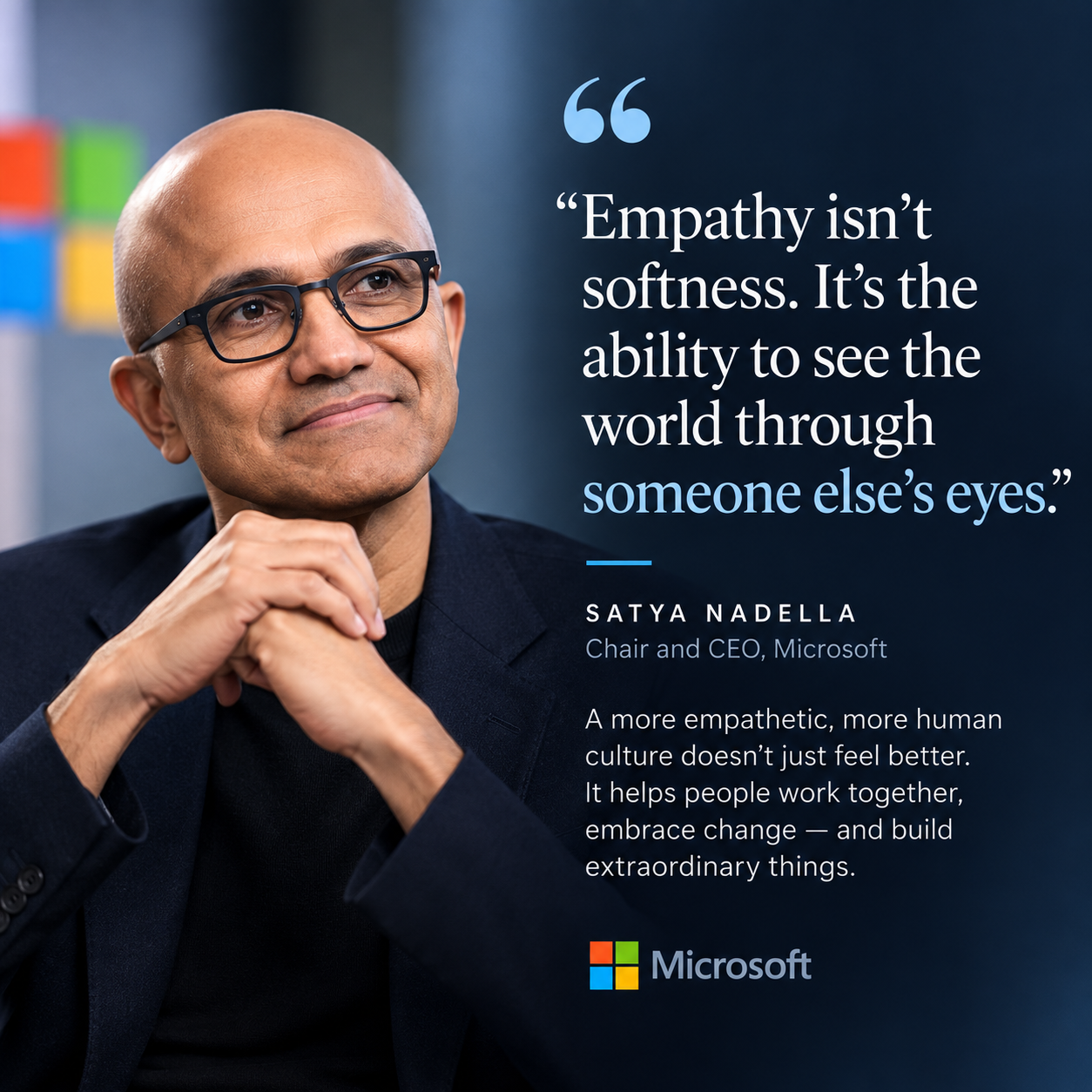
Every powerful leadership philosophy comes from a leader's own origin story.
For Satya Nadella, one of those stories began on August 13, 1996 — 18 years before he became CEO of Microsoft. His son Zain suffered from in-utero asphyxiation (a lack of oxygen before birth), which resulted in severe cerebral palsy.
In his best-selling book Hit Refresh, Satya speaks openly about how difficult those early years were, and about what they taught him. Raising Zain fundamentally reshaped his worldview. It transformed empathy from a personal coping mechanism into Microsoft's core business strategy and cultural cornerstone.
Visiting Zain in intensive care, Nadella looked up and realized the monitors keeping his son alive were running Windows, connected to the cloud. Technology wasn't abstract — it was a lifeline. That image became an internal touchstone.
Our code touches human lives.
As CEO, he turned that empathy into a storytelling culture. He modeled it himself — openly sharing his family's story, a "vulnerability loop" that gave others permission to bring their whole selves to work. And Microsoft built a program, Storytelling for Champions, to teach everyone to tell the human story of a change with a simple four-part structure:
Storytelling for Champions · the structure
- Situation — how things worked before.
- Complication — the friction that showed up.
- Resolution — what shifted.
- The Point — the takeaway that matters.
The empathy showed up in what they built, too. Accessibility became an engineering standard — the Xbox Adaptive Controller, Seeing AI, Immersive Reader for dyslexia — and "know-it-all" gave way to "learn-it-all."
Ultimately, Nadella's personal journey proved that leading with humanity and purpose could drive an empathy-driven cultural evolution, scaling Microsoft's market valuation beyond $3 trillion.
Read the full case study on Empower Circles → (the A.R.C.™ leadership storytelling framework, Hit Refresh, and Microsoft's OpenAI bet.)
Culture Is the Strategy: What I Learned Building a Learning Company
Writing Satya Nadella's story, I kept thinking about my own years at Thinkful (2016–2021, later acquired by Chegg). As a product manager and mentor, I helped build curriculum and products across both technical and human skills — and mentored learners in product, technology, career, and leadership communication.
Looking back, there's a thread I didn't fully see at the time.
My mother spent many years as a teacher and school administrator. Before university, I took a gap year and taught at the French-speaking primary school in Vietnam where she worked. Years later, during a sabbatical when I learned to code, I found myself drawn back to education — and realized that my deeper passion wasn't simply technology. It was learning, people development, and helping others unlock their potential. That's part of what eventually brought me to Bloc and Thinkful.
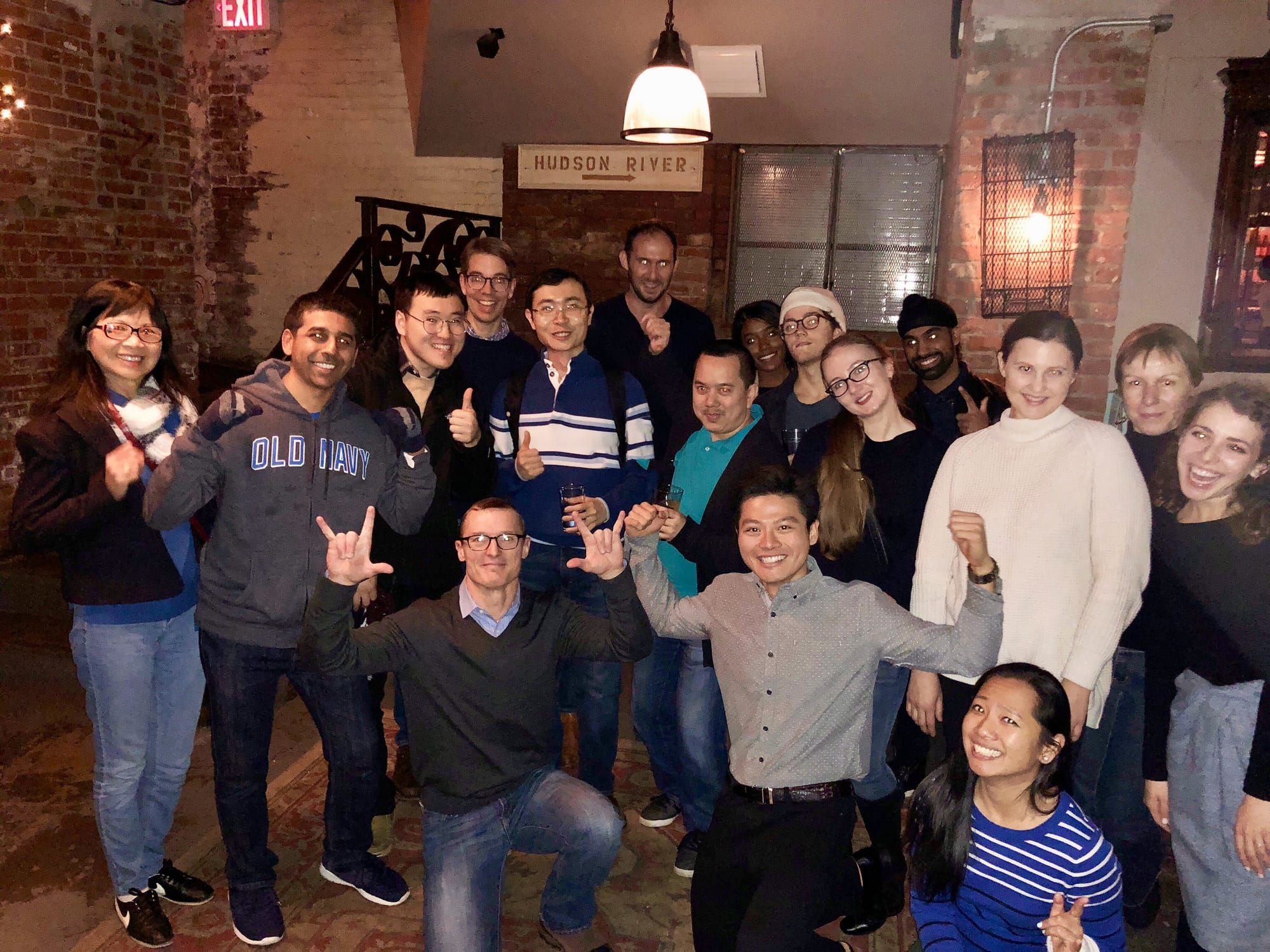
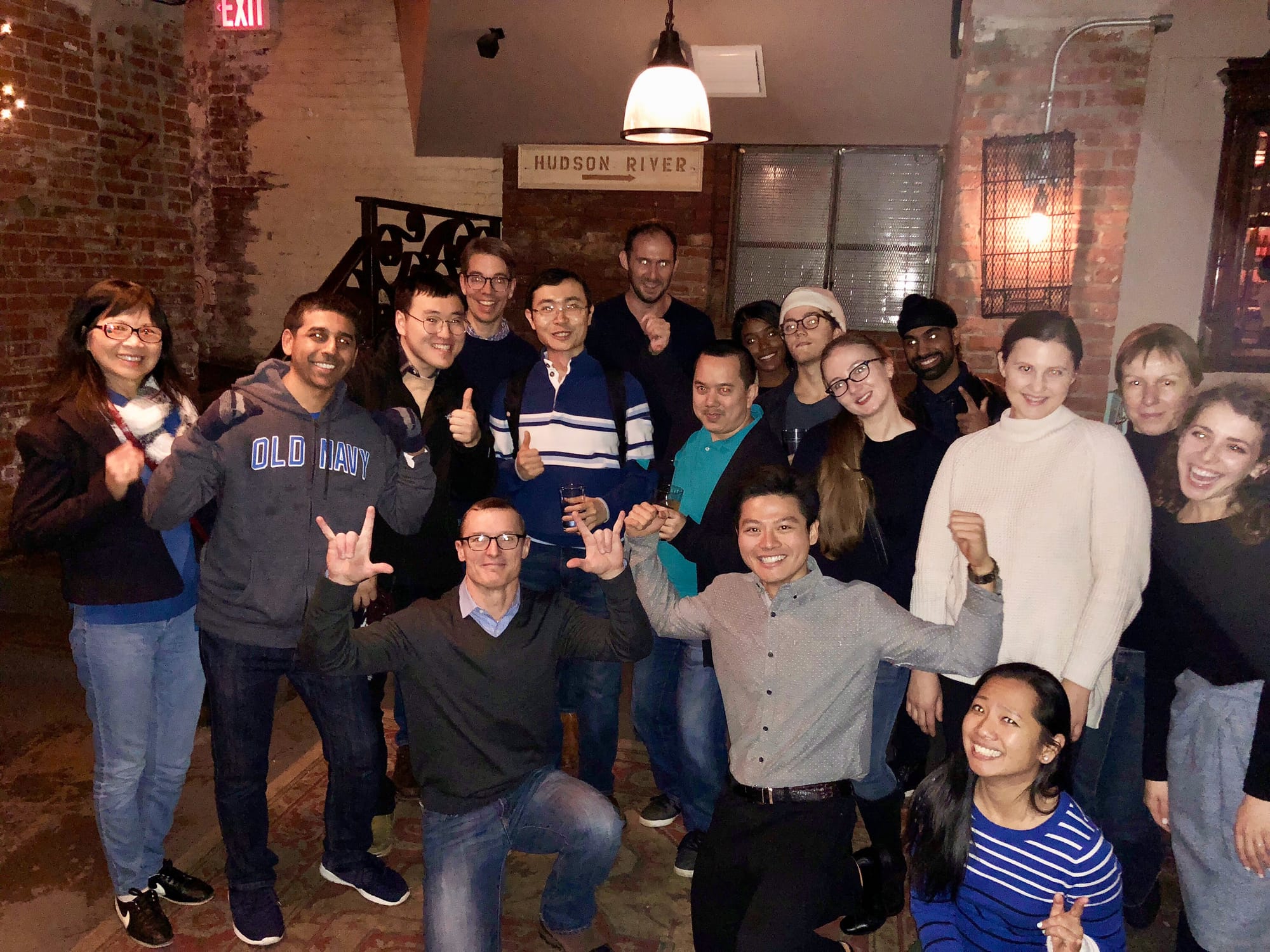
What I cherished most was our culture. Empathy and storytelling ran through everything we did — mentorship, curriculum, marketing, student success. Every time a learner landed a job, the whole company celebrated in Slack, and at our Friday pizza parties. Even as an online program, in-person community and meet-ups were how we built loyalty and belonging across cities all over the US. Care showed up at every touchpoint, for students and mentors alike.
This is where I learned and practiced what I facilitate with organizations today: a storytelling, empathy-first culture is not the soft stuff.
Culture is the strategy — the reason people stay, grow, and do their best work.
It's the difference between a team people work at and one they belong to. It's what turns a workforce into a true community. It's what people carry with them — into their next room, their next role, and the rest of their lives.
Find, Shape, and Tell Your Story
Satya Nadella's signature story — "empathy as superpower" — became how a company leads. Yours can too. The experience that shaped you is often the very story your team, audience, and community needs to hear: the why behind the mission you serve, the thread that turns a group of people into a community with a purpose.
So this week, I'd love to help you start — to find it, shape it, and tell it. As global leaders, builders, and creators, we lead across cultures, functions, and generations. Cross-cultural fluency is mastering our ability to lead and influence across difference. You might be:
- A founder pitching investors from a different industry
- A manager leading across countries, languages, and time zones
- A technical leader translating complexity for a non-technical team
- A leader bridging functions and generations
- A creator making their ideas resonate across communities
Stanford professor Jennifer Aaker finds stories are 22× more memorable than facts alone. In two hands-on hours, you'll find your signature leadership story, shape it with our A.R.C.™ framework, and practice telling it live — leaving with a story you can use tomorrow, and the start of a Leadership Story Bank for years to come.
Three ways in
Workshops · Live on Maven
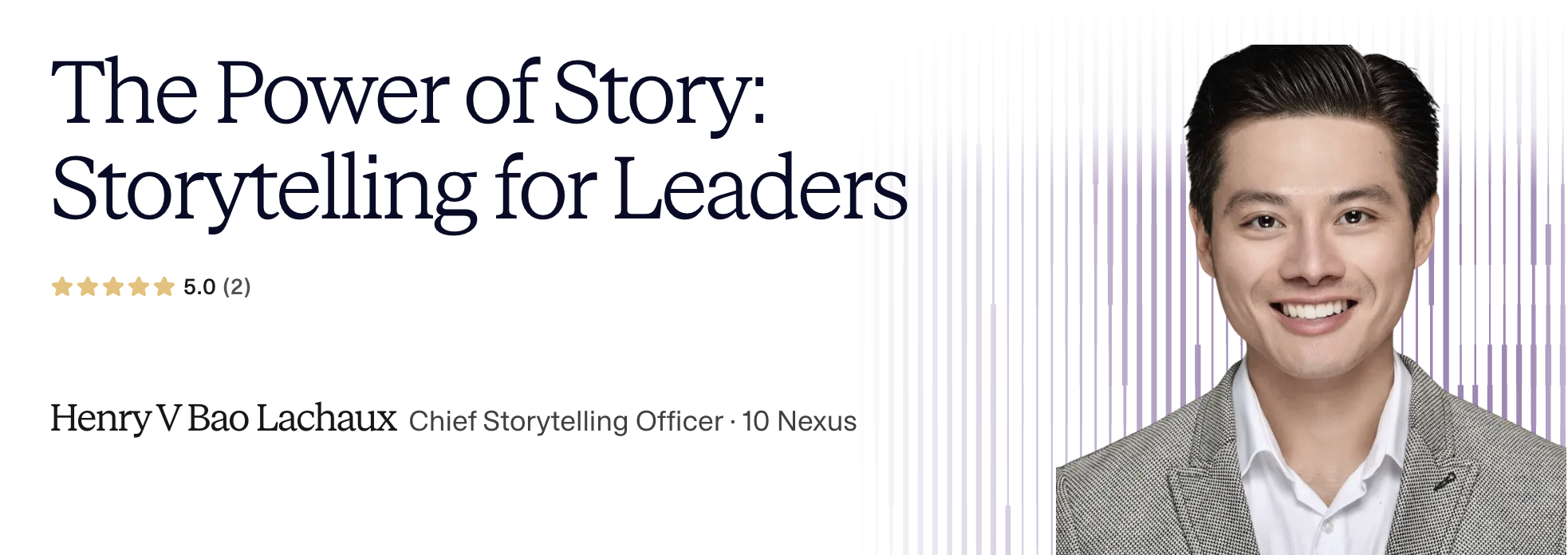
The Power of Story: Storytelling for Leaders
A free lightning session to uncover one of the experiences that shaped you, meet the six story types, and leave with the first spark of your signature story. Warm, fun, and a little moving. A recording is available afterward, so sign up even if you can't join live.
Discover Your Signature Leadership Story
September 17 & 24 · 45 minutes · 4:00–4:45pm CET (Paris) / 10:00–10:45am EDT (New York) / 9:00–9:45pm ICT (Saigon)
The Cohort
Nexus Voices
For those who want the full transformation: a four-session cohort and a curated global circle of leaders, builders, and creators. We go beyond one story — you'll build a repertoire, find your voice, and join a global community of practice that keeps telling and shaping stories together, virtually and at our in-person art salons and storytelling dinners around the world. Rolling admissions, highly selective. Fall cohort opens October 2026.
Explore Nexus Voices →Draw a Card
The Nexus Story Deck
A taste of the deck — 24 prompts to unlock the leadership stories only you can tell, and start building your own story bank. Pick the one that tugs at you:
- The Origin of Your Edge — where you come from that once gave you an advantage others in the room didn't have.
- The Only One in the Room — a time you were the only one like you at the table, and your perspective changed the decision.
- The Failure You'd Repeat — a failure that taught you more than any win.
- The Moment It Clicked — when you knew what you were here to build.
I can't wait to hear your story. Let's have some fun together, finding and shaping the signature leadership stories only you can tell — this week, and at our upcoming art salons and storytelling dinners around the world.
Rooting for you,
Henry